
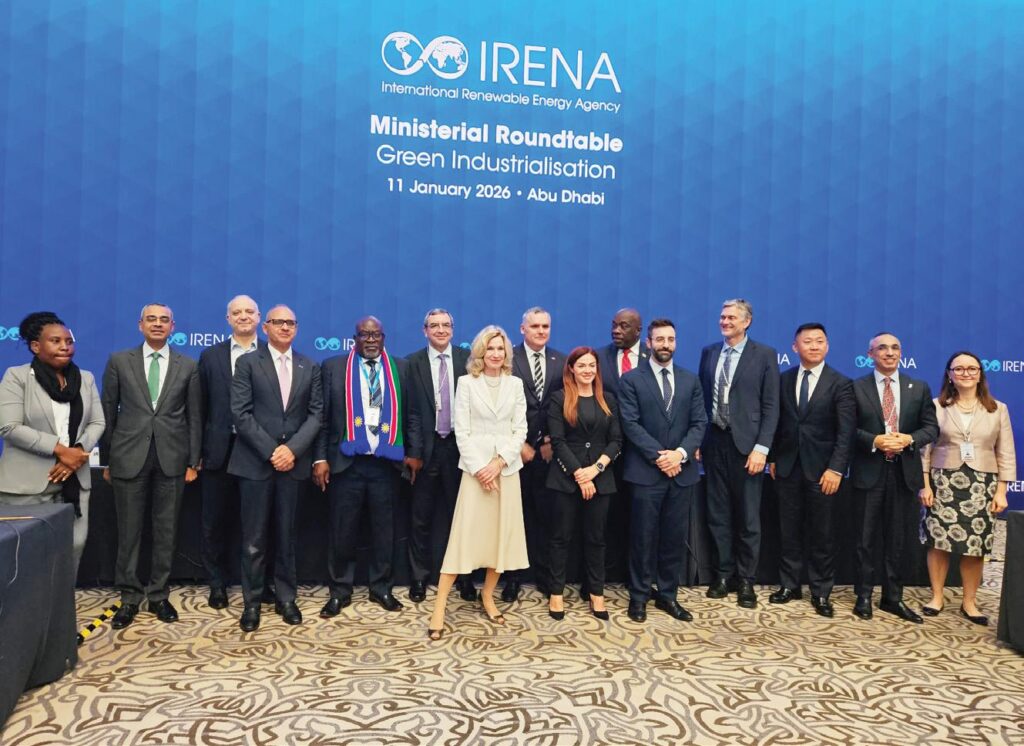
NAMIBIA TARGETS 70% RENEWABLE ENERGY IN ELECTRICITY MIX BY 2030
Namibia has set a national target to achieve 70% renewable energy in the national electricity mix by 2030. This was according to Industries, Mines and Energy Minister Modestus Amutse at the 16th session of the International Renewable Energy Agency (IRENA) Assembly held in Abu Dhabi, United Arab Emirates (UAE). This, the minister said, is supported by deliberate policy and regulatory reforms to unlock investment.
The gathering, held under the theme “Powering Humanity: Renewable Energy for Shared Prosperity”, addressed emerging global trends and pressing issues which included, amongst others, advancing geothermal energy, energy security and cost-effective energy transition and policy measures relating to critical materials. “These include the introduction of the modified single buyer model, which has opened the electricity market to greater private sector participation while maintaining system stability and oversight,” said Amutse.
The reforms have led to growing investment by independent power producers, increased renewable energy capacity and reduced reliance on electricity imports, while also enabling power exports to neighbouring countries.
The minister further noted that Namibia views green hydrogen as a strategic opportunity to advance industrialisation and participate in emerging global lowcarbon value chains. He said the country has developed a green hydrogen strategy and roadmap outlining priority projects, infrastructure needs, regulatory measures and skills development, with a focus on ensuring local value creation, job opportunities and inclusive economic growth. Amutse also announced a major milestone, revealing that Namibia has successfully produced commercially viable green hydrogen-based steel. “This achievement demonstrates our country’s capacity to integrate renewable energy with advanced green hydrogen technologies to support industrialisation, create quality jobs and generate high-value products for domestic use and future export markets,” he noted.
The assembly brought together more than 1,500 participants, including global leaders and energy decisionmakers. Participants reviewed progress and outlined actions to accelerate the global renewable energy transition. The discussions were aligned with the UAE Consensus, the 2030 Agenda for Sustainable Development and the Paris Agreement. The outgoing president of the 15th IRENA Assembly, Slovenia’s Minister of the Environment, Climate and Energy, Bojan Kumer, reaffirmed that IRENA’s core mandate is to facilitate multilateral cooperation in advancing the global clean energy transition. He said that the agency remains the leading international institution for promoting renewable energy worldwide. Incoming president of the 16th Assembly and Minister of Energy and Mines of the Dominican Republic, Joel Santos Echeverría, echoed the assembly’s theme by reaffirming commitments to tripling global renewable energy capacity and doubling energy efficiency by 2030. He stressed that shared prosperity can only be achieved through solidarity, cooperation and shared responsibility amongst nations.

