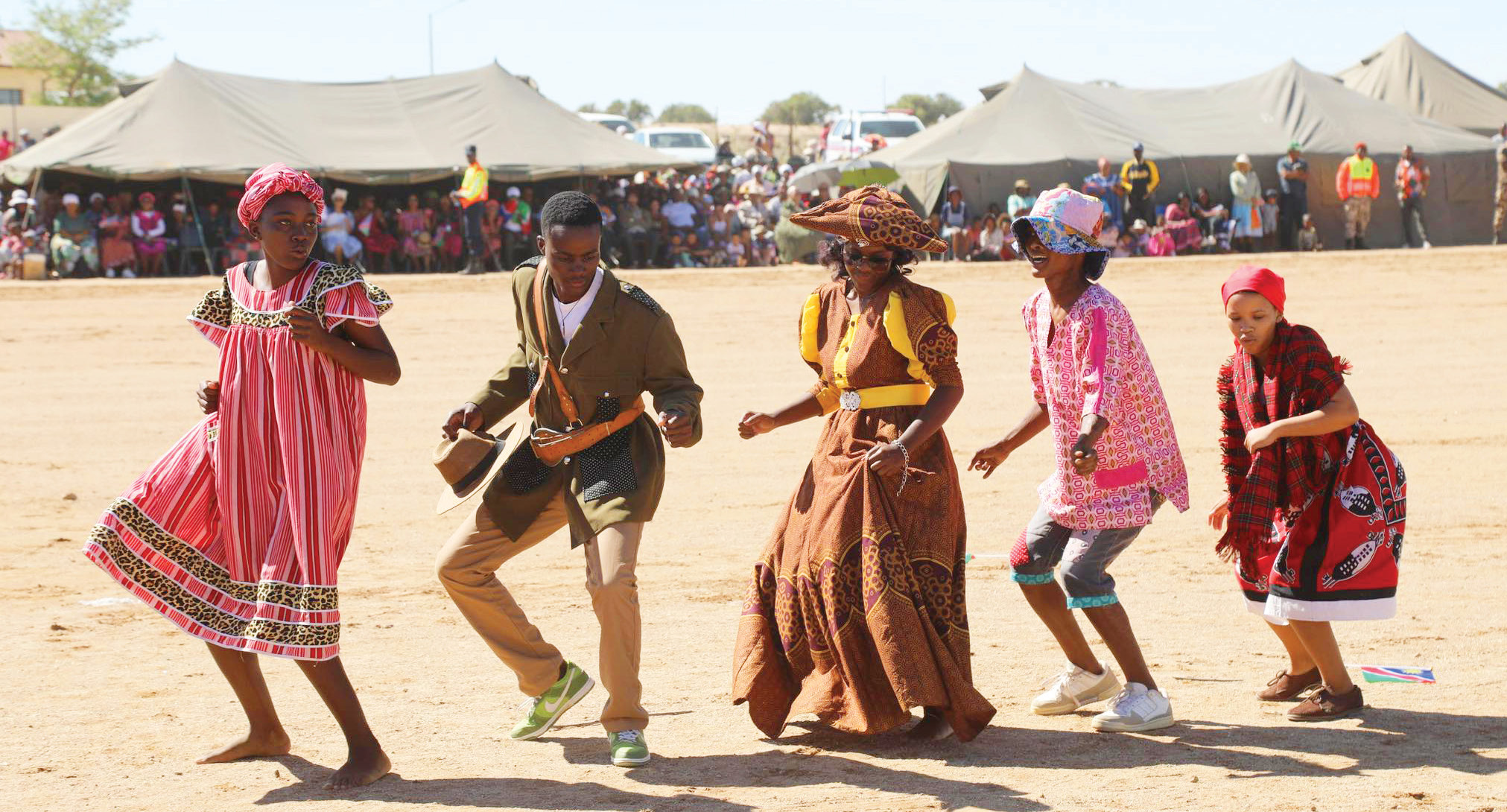
Colours filled the streets across the country, as song and dance brought communities together in celebration of Namibia’s 36th Independence Day anniversary celebrations. Communities from all 14 regions united in a powerful display of pride and national identity, marking the milestone with a shared spirit of joy and reflection.
“As we celebrate, we also remember the nations that gave shelter to our people, the friends and comrades who stood with us, as well as the brave men and women who paid the ultimate sacrifice so that Namibia could be free,” said President Netumbo NandiNdaitwah as she addressed the nation.
Over the past three and a half decades, the country has made notable progress in maintaining peace, strengthening democratic institutions and advancing socio-economic development. Peaceful transitions of power and a continued commitment to constitutional governance have positioned Namibia as one of Africa’s stable democracies. As the nation celebrates this achievement, focus remains on addressing key challenges such as youth unemployment, inequality and economic diversification, while building on opportunities across different sectors. “Namibia has built a strong foundation of peace, stability and democratic governance. Yet, we are mindful that the work is not complete. The expectations of our people, especially our youth, call on us to accelerate inclusive development, create opportunities and ensure that the benefits of independence are shared by all,” she noted.
Regional progress
Also celebrating her birthday, which coincides with Namibia’s Independence Day, Vice President Lucia Witbooi reaffirmed the government’s commitment to inclusive development while addressing communities in the //Kharas Region.
Speaking during the engagements, Witbooi highlighted Namibia’s progress since independence, noting that the //Kharas Region has undergone a significant transformation since independence, evolving from a historically marginalised area into a strategic economic hub. She pointed to growth in key sectors, including export-driven agriculture along the Orange River, particularly table grape production in Aussenkehr, as well as agri-processing linked to the Naute Dam and Neckartal Dam projects.
Additional gains have been recorded in mining, fisheries and tourism, supported by major infrastructure investments that have improved connectivity, service delivery and institutional capacity. She also highlighted ongoing efforts to extend development to smaller settlements through improved access to water, sanitation, electricity and road networks.
In the health sector, she said access to healthcare has expanded through a growing network of clinics and health facilities, with the government continuing to invest in both the construction of new clinics and the upgrading of existing ones to better serve communities. “The government continues to renovate and build new clinics to make health accessible to the residents of the //Kharas Region. Positioned within the Lüderitz– Aus Development Corridor, the region is now entering a new phase of industrialisation, driven by large-scale renewable energy and green hydrogen initiatives, which are expected to accelerate economic growth, create employment and reinforce the //Kharas Region’s role as a key contributor to Namibia’s sustainable development trajectory,” Witbooi added.
Despite the progress, the vice president acknowledged that challenges remain, including limited value addition, constrained industrial activity and gaps in water, sanitation and housing, compounded by fiscal pressures. However, she noted that the government is actively addressing these issues through targeted interventions, including infrastructure upgrades in Grünau, water expansion projects in Ariamsvlei, rehabilitation of water systems in Noordoewer and Aussenkehr, as well as the servicing of residential plots in Aus, among other developments in the region.
Speeches delivered across the regions carried a common message, the need to create opportunities and ensure that the benefits of independence reach every Namibian. The call for shared prosperity was evident throughout the day’s events, reflecting a collective desire for a future where no one is left behind.
As the celebrations came to an end, the spirit of unity and reflection lingered across the country. Beyond the speeches and ceremonies, the day served as a reminder of how far Namibia has come and the journey that still lies ahead. With a renewed sense of purpose and a shared commitment to progress, the nation looks forward with hope, determined to build a future where the promise of independence is not only remembered, but fully realised in the lives of all its people.
Maggie Forcelledo Paz